
Complete Fertility Diet Meal Plan Guide: When you’re trying to conceive, what you eat matters more than you might think. A well-planned fertility diet meal plan can significantly impact your reproductive health and increase your chances of conception.
Research shows that nutritional choices affect hormone balance, egg quality, sperm health, and overall reproductive function. For Indian couples on their conception journey, adapting traditional foods with fertility-boosting nutrients creates a powerful foundation for success.
Many couples searching for answers on how to get pregnant focus on timing alone, but nutrition plays an equally important role. The right combination of fertility-supporting foods can help enhance reproductive health and improve your chances of conceiving.
This comprehensive guide provides everything you need to start a healthy fertility diet today. You’ll discover science-backed nutrition strategies, a complete 7-day meal plan tailored for Indian tastes, and practical tips to make fertility eating sustainable.
Whether you’re just beginning to think about conception or have been trying for a while, the right fertility nutrition can make a meaningful difference.
The Science Behind the Complete Fertility Diet Meal Plan Guide
How Nutrition Affects Conception
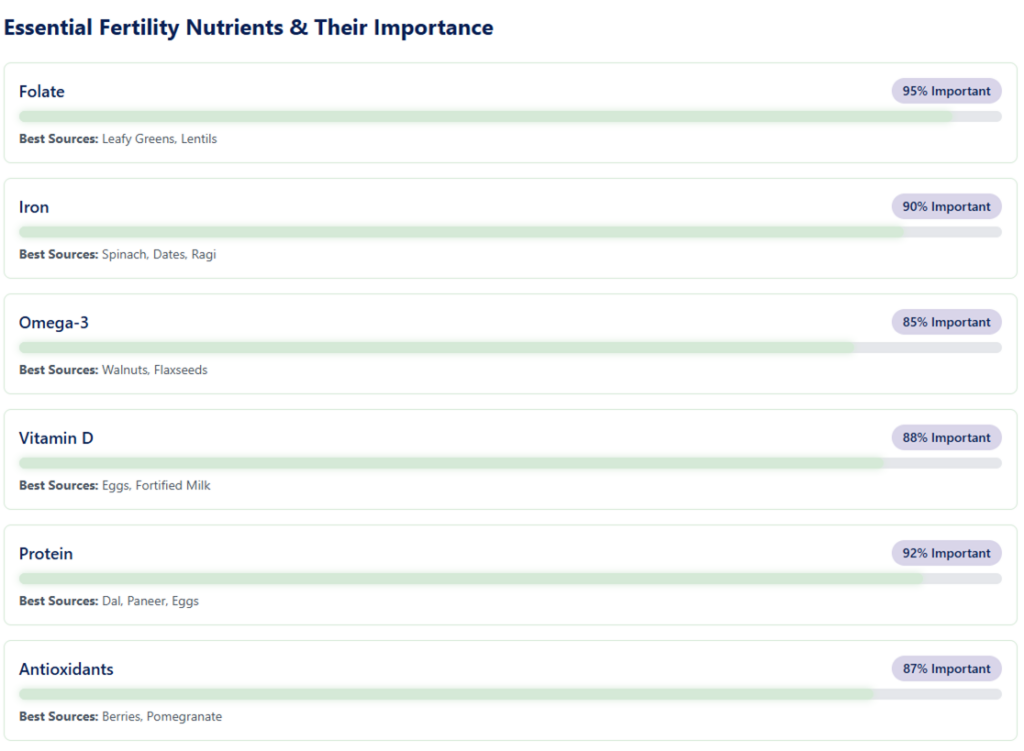
Your body needs specific nutrients to produce healthy eggs and sperm, maintain hormonal balance, and create an optimal environment for conception.
Studies have demonstrated clear connections between dietary patterns and fertility outcomes. Women following an optimal fertility diet show improved ovulation rates and better egg quality. Men benefit from enhanced sperm count, motility, and morphology.
Key Nutritional Factors in the Complete Fertility Diet Meal Plan Guide
- Antioxidants protect eggs and sperm from oxidative stress and cellular damage
- Healthy fats support hormone production and reduce inflammation
- Complex carbohydrates help maintain stable blood sugar and insulin levels
- Plant-based proteins improve ovulatory function compared to excessive animal protein
- Folate and B vitamins support DNA synthesis and prevent neural tube defects
- Iron prevents anemia and supports healthy ovulation
- Vitamin D regulates reproductive hormones and improves fertility outcomes
The Harvard Fertility Diet Study: Insights for Your Complete Fertility Diet Meal Plan Guide
Researchers at Harvard studied over 17,000 women trying to conceive. They found that following a pro fertility diet reduced ovulatory infertility by up to 66%.
The study identified specific dietary patterns that enhanced fertility. These included choosing whole grains over refined carbs, consuming plant proteins, eating full-fat dairy in moderation, and taking prenatal vitamins.
Indian Foods and Fertility
Traditional Indian cuisine naturally includes many fertility diet foods. Lentils, whole grains, ghee, nuts, seeds, and spices all support reproductive health.
The challenge lies in balancing traditional preparations with optimal fertility nutrition. Too much refined flour, sugar, and fried foods can negatively impact hormone balance.
This fertility eating plan honors Indian culinary traditions while maximizing nutritional benefits for conception.
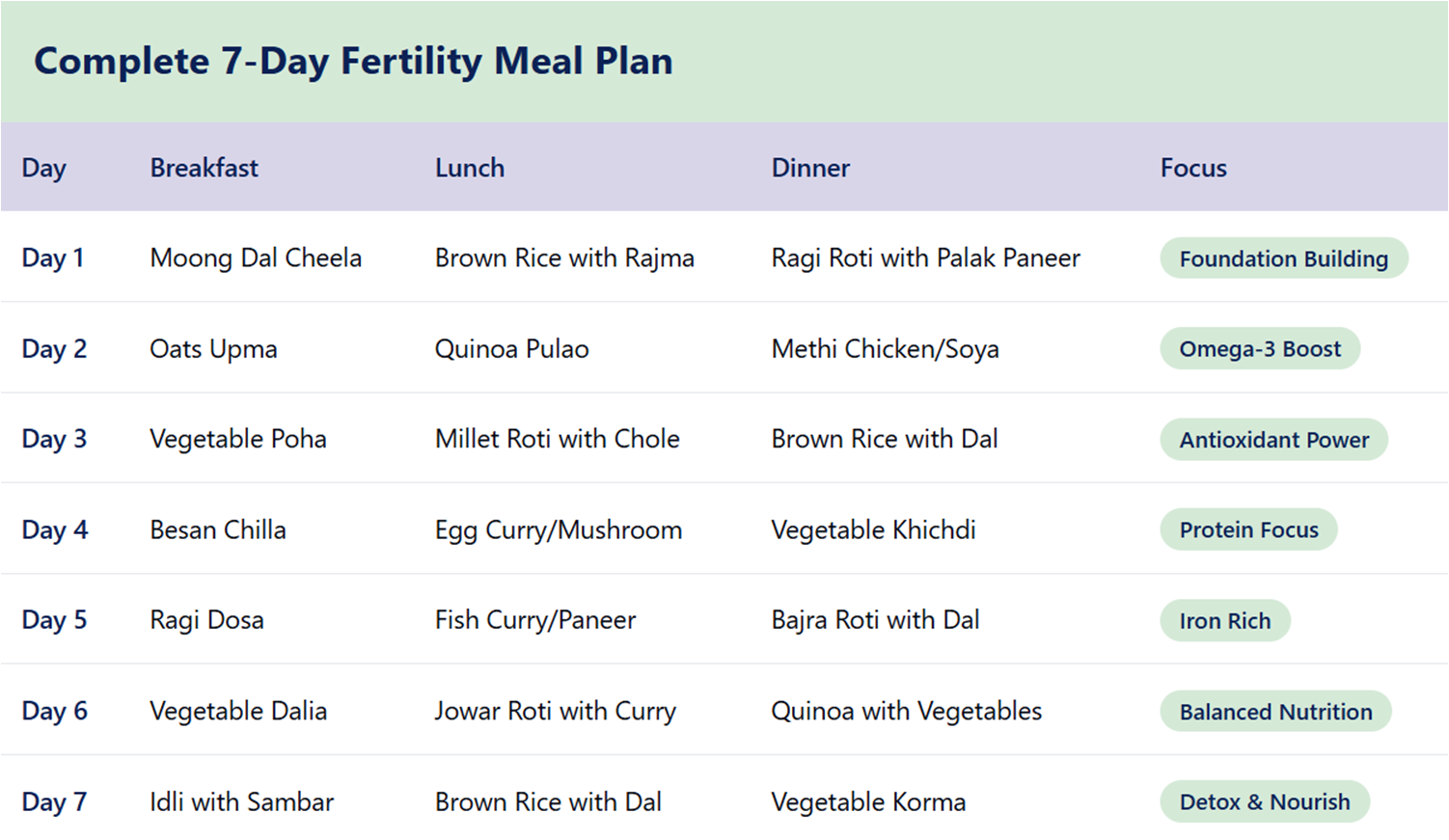
Complete 7-Day Fertility Meal Plan in the Complete Fertility Diet Meal Plan Guide
This meal plan for fertility includes three meals and two snacks daily. All recipes use ingredients easily available in Indian markets.
Day-by-Day 7-Day Meal Plan in Your Complete Fertility Diet Meal Plan Guide
1sr Day: Foundation Building
- Breakfast: Moong dal cheela (2 pieces) with mint chutney, topped with flaxseeds
- Mid-Morning Snack: Fresh pomegranate seeds (1/2 cup) with soaked almonds (8-10)
- Lunch: Brown rice with rajma curry, cucumber raita, and mixed vegetable salad
- Evening Snack: Roasted makhana (1 cup) with turmeric
- Dinner: Ragi roti (2) with palak paneer and tomato soup
2nd Day: Omega-3 Boost
- Breakfast: Oats upma with vegetables and walnuts, served with coconut chutney
- Mid-Morning Snack: Seasonal fruit (apple or guava) with pumpkin seeds
- Lunch: Quinoa pulao with mixed vegetables, moong dal, and beetroot salad
- Evening Snack: Homemade hummus with carrot and cucumber sticks
- Dinner: Whole wheat roti (2) with methi chicken (or soya chunks), jeera rice, and sautéed greens
3rd Day: Antioxidant Power
- Breakfast: Vegetable poha with peanuts, curry leaves, and lemon
- Mid-Morning Snack: Fresh berries (if available) or papaya with chia seeds
- Lunch: Millet roti (2) with chole, cucumber-tomato salad, and curd
- Evening Snack: Boiled black chana chaat with onions, tomatoes, and lemon
- Dinner: Brown rice with dal tadka, stir-fried bhindi, and raita
4th Day: Protein Focus
- Breakfast: Besan chilla (2) stuffed with paneer and vegetables
- Mid-Morning Snack: Dates (3-4) stuffed with nuts
- Lunch: Whole wheat roti (2) with egg curry (or mushroom masala), mixed vegetable sabzi, and salad
- Evening Snack: Sprouts salad with lemon and spices
- Dinner: Vegetable khichdi with ghee, papad, and buttermilk
5th Day: Iron Rich
- Breakfast: Ragi dosa (2) with sambar and coconut chutney
- Mid-Morning Snack: Orange or seasonal citrus fruit with Brazil nuts
- Lunch: Brown rice with fish curry (or paneer tikka masala), spinach dal, and cucumber salad
- Evening Snack: Roasted chana with jaggery
- Dinner: Bajra roti (2) with mixed dal, sautéed methi leaves, and raita
6th Day: Balanced Nutrition
- Breakfast: Vegetable dalia with ghee and nuts
- Mid-Morning Snack: Coconut water with soaked figs
- Lunch: Jowar roti (2) with chicken curry (or tofu bhurji), mixed vegetable sabzi, and salad
- Evening Snack: Sweet potato chaat with chaat masala and lemon
- Dinner: Quinoa with mixed vegetable curry, cucumber raita, and roasted papad
7th Day: Detox and Nourish
- Breakfast: Idli (3-4) with sambar and tomato chutney, garnished with sesame seeds
- Mid-Morning Snack: Fresh sugarcane juice (moderate) with roasted cashews
- Lunch: Brown rice with masoor dal, baingan bharta, and mixed salad
- Evening Snack: Homemade trail mix (nuts, seeds, dried fruits)
- Dinner: Whole wheat roti (2) with vegetable korma, dal fry, and buttermilk
Foods to Include and Avoid in Your Complete Fertility Diet Meal Plan Guide
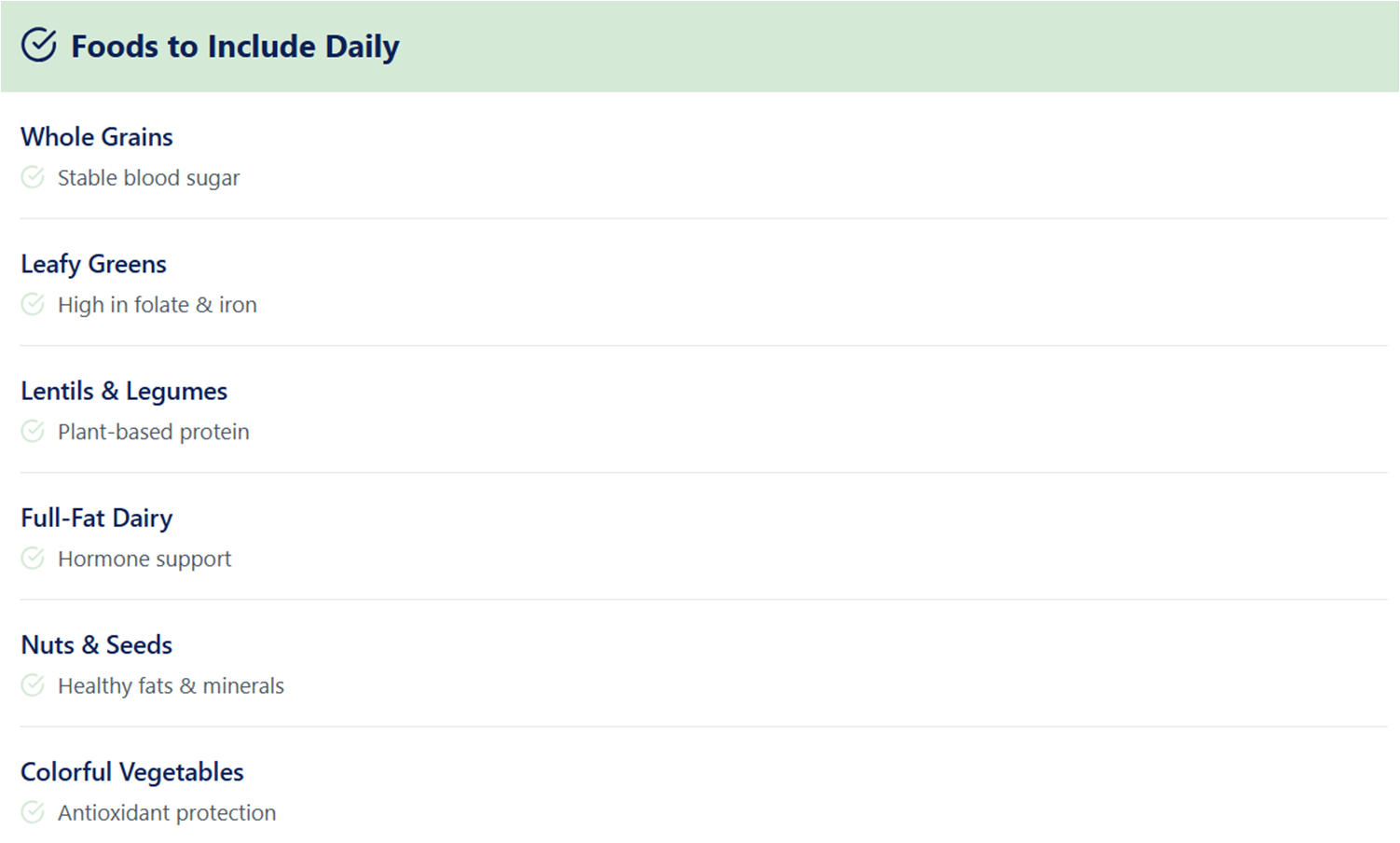
Foods to Include Daily
Building a fertility diet food list helps ensure you get essential nutrients consistently.
Must-Have Daily Foods in Your Complete Fertility Diet Meal Plan Guide
- Whole Grains: Choose brown rice, whole wheat, ragi, bajra, jowar, quinoa, or oats. These provide complex carbohydrates, fiber, and B vitamins essential for hormone production.
- Leafy Greens: Include spinach, methi, amaranth, or moringa leaves. They’re rich in folate, iron, and antioxidants that support egg quality.
- Lentils and Legumes: Eat moong dal, masoor dal, rajma, chana, or black-eyed peas daily. Plant-based proteins improve ovulatory function.
- Healthy Fats: Use ghee, coconut oil, olive oil, nuts (almonds, walnuts, cashews), and seeds (flax, chia, pumpkin, sesame). These support hormone synthesis.
- Full-Fat Dairy: Include whole milk, curd, paneer, or ghee in moderation. Studies show full-fat dairy improves fertility better than low-fat options.
- Colorful Vegetables: Eat carrots, tomatoes, bell peppers, beetroot, and pumpkin. Antioxidants protect reproductive cells from damage.
- Seasonal Fruits: Choose pomegranate, papaya, oranges, berries, or apples. Vitamin C enhances iron absorption and supports reproductive health.
Fertility-Boosting Superfoods
- Seeds: Flaxseeds, sunflower seeds, pumpkin seeds, and sesame seeds provide omega-3s, zinc, and selenium.
- Nuts: Almonds, walnuts, and Brazil nuts offer vitamin E, healthy fats, and selenium for reproductive health.
- Ghee: Traditional clarified butter provides vitamins A, D, E, and K, essential for hormone production.
- Spices: Turmeric, cinnamon, fenugreek, and cumin reduce inflammation and balance hormones.
- Dates and Figs: Natural sweeteners rich in iron, fiber, and minerals that support fertility.
Foods to Limit or Avoid
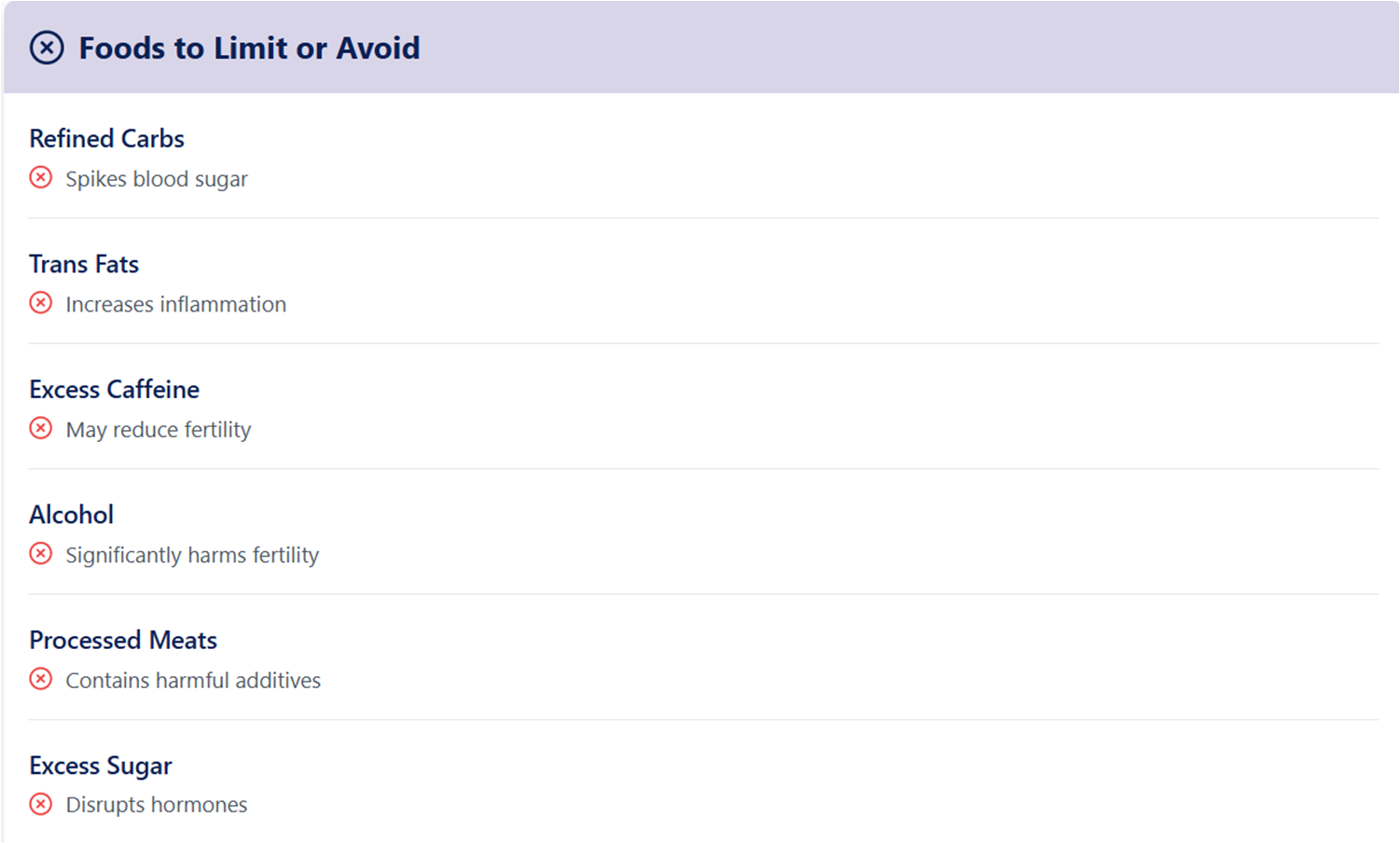
While following a whole food fertility diet, certain foods can interfere with conception.
Reduce These Foods
- Refined Carbohydrates: Limit white bread, maida products, white rice, and refined flour. These spike blood sugar and insulin, disrupting hormone balance.
- Trans Fats: Avoid vanaspati, dalda, and commercially baked goods. Trans fats increase inflammation and harm fertility.
- Excess Caffeine: Limit chai, coffee, and caffeinated beverages to 1-2 cups daily. High caffeine intake may reduce fertility.
- High-Mercury Fish: Avoid shark, swordfish, and king mackerel. Choose smaller fish like sardines or pomfret instead.
- Processed Meats: Reduce consumption of sausages, salami, and processed chicken products.
- Excess Sugar: Minimize sweets, sugary beverages, and desserts. Sugar disrupts insulin and reproductive hormones.
Foods to Avoid Completely
- Alcohol: Completely eliminate alcohol when trying to conceive. It significantly reduces fertility in both men and women.
- Raw or Undercooked Foods: Avoid raw eggs, unpasteurized dairy, and undercooked meat to prevent foodborne illness.
- Artificial Sweeteners: Skip diet sodas and artificially sweetened products. Their impact on fertility remains uncertain.
- Soy in Excess: While moderate soy is fine, excessive amounts may interfere with hormone balance.
Sample Recipes for Each Meal
Breakfast: Moong Dal Cheela
- Ingredients: 1 cup moong dal (soaked 4 hours), 1/4 tsp turmeric, salt to taste, chopped onions, tomatoes, green chilies, ginger, coriander leaves, 1 tbsp flaxseed powder.
- Method: Grind soaked dal with water to make smooth batter. Add vegetables, spices, and flaxseeds. Pour on hot tawa, cook both sides with minimal oil. Serve with mint chutney.
- Fertility Benefits: High protein, folate, and omega-3s support reproductive health.
Lunch: Brown Rice with Rajma Curry
Ingredients: 1 cup rajma (soaked overnight), 2 tomatoes, 1 onion, ginger-garlic paste, cumin, coriander powder, garam masala, kasuri methi, salt.
Method: Pressure cook rajma until soft. Prepare tomato-onion gravy with spices. Add cooked rajma, simmer 10 minutes. Garnish with kasuri methi. Serve with brown rice.
Fertility Benefits: Plant protein, iron, folate, and complex carbs optimize ovulation.
Snack: Roasted Makhana
- Ingredients: 2 cups makhana, 1 tsp ghee, 1/4 tsp turmeric, pinch of black pepper, rock salt.
- Method: Heat ghee in pan. Add makhana, roast until crispy. Add turmeric, pepper, and salt. Mix well.
- Fertility Benefits: Low-calorie, protein-rich snack with antioxidant properties.
Dinner: Ragi Roti with Palak Paneer
- Ragi Roti Ingredients: 1 cup ragi flour, warm water, salt, 1 tsp oil.
- Method: Knead dough with warm water. Make small balls, roll into rotis. Cook on tawa until spots appear.
- Palak Paneer Ingredients: 2 cups spinach, 100g paneer cubes, 1 onion, tomato, ginger-garlic, cumin, spices, 1 tbsp cream.
- Method: Blanch spinach, make puree. Prepare onion-tomato base, add spinach puree and spices. Add paneer cubes, cook 5 minutes. Finish with cream.
- Fertility Benefits: Calcium, iron, folate, and protein support reproductive hormones and egg quality.
Shopping List Template
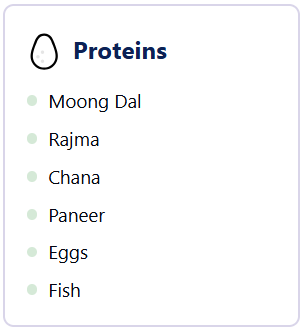
Use this fertility diet food list when grocery shopping to stick to a fertility diet easily.
Proteins
- Moong dal, Masoor dal
- Toor dal
- Rajma
- Chana (chickpeas)
- Black chana
- Eggs (organic)
- Paneer
- Fish (small varieties)
- Chicken (free-range, optional)
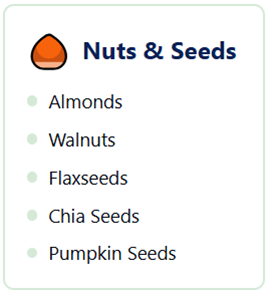
Nuts and Seeds
- Almonds
- Walnuts
- Cashews
- Brazil nuts
- Flaxseeds
- Chia seeds
- Pumpkin seeds
- Sesame seeds
- Sunflower seeds
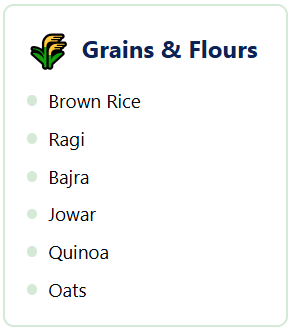
Grains and Flours
- Brown rice
- Whole wheat flour
- Ragi flour, Bajra flour
- Jowar flour
- Quinoa
- Oats
- Whole wheat pasta
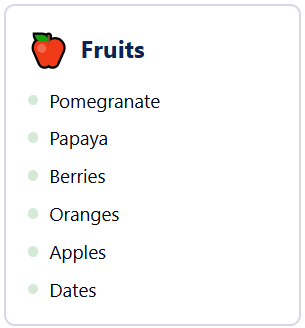
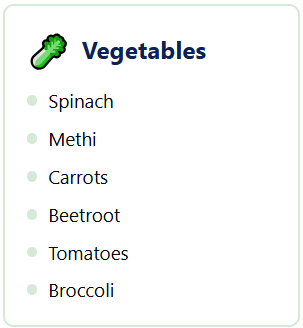
Fruits and Vegetables
- Leafy greens (spinach, methi, amaranth)
- Carrots, beetroot, pumpkin
- Tomatoes, onions, ginger, garlic
- Bell peppers, broccoli, cauliflower
- Pomegranate, papaya, berries
- Oranges, apples, seasonal fruits
- Sweet potatoes
Pantry Staples
- Turmeric, cumin, coriander
- Cinnamon, fenugreek
- Rock salt, black pepper
- Jaggery, dates
- Coconut (fresh or dried)
- Makhana
Oils and Fats
- Ghee
- Cold-pressed coconut oil
- Extra virgin olive oil
- Mustard oil (in moderation)
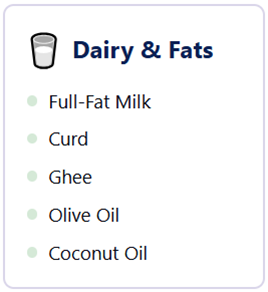
Dairy
- Full-fat milk
- Fresh curd
- Paneer
- Ghee
Complete Fertility Diet Shopping List
Meal Prep Tips for Fertility in the Complete Fertility Diet Meal Plan Guide
Consistency matters when following the fertility diet meal plan. These strategies make healthy eating sustainable.
Weekly Preparation
- Sunday Prep Session: Dedicate 2-3 hours to prepare for the week ahead. Soak and cook lentils, chop vegetables, make chutneys, and portion snacks.
- Batch Cooking: Prepare base gravies, dal preparations, and brown rice in larger quantities. Store in refrigerator for 3-4 days.
- Pre-Portion Snacks: Roast nuts and seeds, portion them into small containers. Keep ready-to-eat fertility diet meals available.
Smart Storage
- Glass Containers: Store prepared foods in glass containers to avoid chemical leaching from plastic.
- Label and Date: Mark containers with contents and preparation date. Use older items first.
- Freeze Extras: Make extra rotis, parathas, or base gravies and freeze. Thaw as needed.
Time-Saving Strategies in Your Complete Fertility Diet Meal Plan Guide
- Pressure Cooker: Use for quick lentil and bean preparation. Saves time without compromising nutrition.
- One-Pot Meals: Khichdi, pulao, and vegetable-dal combinations require minimal cleanup.
- Pre-Cut Vegetables: Wash, cut, and store vegetables on weekends. They stay fresh for 3-4 days in airtight containers.
- Morning Routine: Soak nuts, seeds, and grains the night before. They’re ready to use in breakfast.
Tracking Your Progress
Monitoring your journey helps you stick to a fertility diet and identify what works best for your body.
What to Track
- Daily Food Journal: Write down meals, portions, and how you feel. This helps identify patterns and sensitivities.
- Water Intake: Note daily water consumption. Aim for 8-10 glasses to support reproductive health.
- Menstrual Cycle: Track cycle length, symptoms, and any changes. Diet improvements often show in more regular cycles.
- Energy Levels: Note morning and evening energy. A proper fertility eating plan should increase vitality.
- Weight Changes: Monitor weight weekly. Gradual movement toward healthy BMI improves fertility.
- Supplement Intake: Record prenatal vitamins and any additional supplements.
Signs of Progress
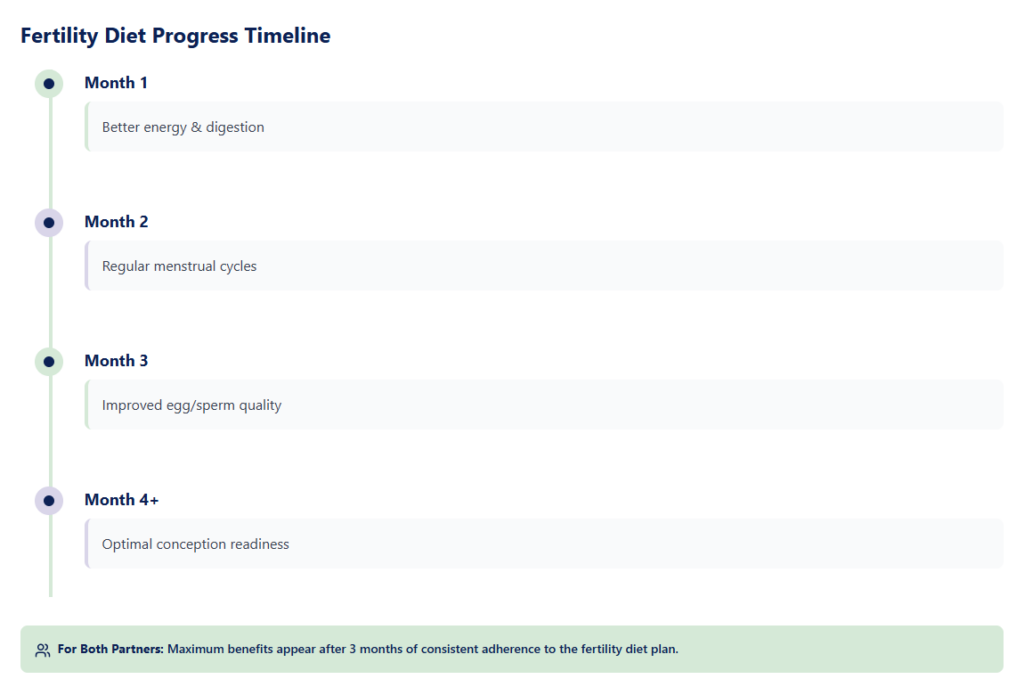
Positive changes may appear within 2-3 months of following the best fertility diet plan.
Look for improved energy levels, more regular menstrual cycles, reduced PMS symptoms, better sleep quality, clearer skin, and stable mood. These indicate improving hormonal balance.
For men, improvements in vitality and energy suggest enhanced sperm health, though actual sperm quality testing takes 3 months to reflect dietary changes.
When to Adjust
If you experience persistent digestive issues, unexplained weight gain or loss, extreme fatigue, or no menstrual cycle changes after 3 months, consult a fertility nutritionist or doctor.
Individual needs vary. Some people require more protein, others need different carbohydrate ratios. Professional guidance helps optimize your conception diet.
FAQs About the Complete Fertility Diet Meal Plan Guide
Q: How long should I follow a fertility diet before trying to conceive?
Ideally, both partners should follow a healthy fertility diet for at least 3 months before actively trying to conceive. This allows time for egg and sperm quality to improve, as eggs take about 90 days to mature and sperm regenerates every 72 days.
Q: Can a fertility diet help if I have PCOS?
Yes, absolutely. A pro fertility diet focusing on low glycemic index foods, anti-inflammatory ingredients, and balanced macronutrients can significantly improve PCOS symptoms, regulate cycles, and enhance fertility. Include more whole grains, lean proteins, and reduce refined carbs.
Q: Should my partner also follow the fertility meal plan?
Yes. Male fertility depends heavily on nutrition too. Sperm quality, count, and motility improve with proper fertility nutrition. Both partners following fertility diets and conception strategies doubles your chances of success.
Q: Are supplements necessary along with a fertility diet?
While an optimal fertility diet provides most nutrients, prenatal vitamins ensure you meet daily requirements for folate, iron, and other essential vitamins. Consult your doctor about specific supplements based on your individual needs and any deficiencies.
Q: Can I eat out while following a fertility eating plan?
Yes, but choose wisely. Select restaurants offering whole grain options, grilled or baked dishes, and vegetable-rich meals. Avoid heavily fried foods, excessive refined carbs, and dishes with unknown ingredients. Most Indian restaurants can accommodate requests for less oil and whole wheat rotis.
Q: What if I’m vegetarian or vegan?
The fertility diet meal plan adapts easily to vegetarian and vegan preferences. Focus on varied plant proteins (lentils, beans, tofu, tempeh), include nuts, seeds, and ensure adequate B12, iron, and omega-3 intake through supplements or fortified foods.
Q: How much weight should I gain or lose for optimal fertility?
Maintain a BMI between 18.5-24.9 for optimal fertility. If underweight, gradually gain through nutrient-dense foods. If overweight, aim to lose 5-10% of body weight through the whole food fertility diet and regular exercise. Extreme or rapid weight changes can disrupt hormones.
Q: Can fertility diet help after 35?
Yes. While age affects fertility, nutrition significantly impacts egg quality and overall reproductive health at any age. Women over 35 particularly benefit from antioxidant-rich fertility diet foods that protect eggs from oxidative damage.
Q: What’s the role of water in fertility?
Adequate hydration improves cervical mucus quality, supports nutrient transport to reproductive organs, and aids detoxification. Drink 8-10 glasses of water daily. Coconut water, herbal teas, and fresh juices also count toward hydration.
Q: Should I avoid gluten for fertility?
Only avoid gluten if you have celiac disease or confirmed gluten sensitivity. For others, whole wheat provides beneficial nutrients. However, if you notice digestive issues or inflammation, try eliminating gluten for 30 days to assess impact.
Q: How does stress affect fertility diet results?
Chronic stress elevates cortisol, which disrupts reproductive hormones even with perfect nutrition. Combine your meal plan for fertility with stress management through yoga, meditation, adequate sleep, and relaxation techniques.
Q: Can I have cheat meals?
Occasional treats won’t derail your progress. Follow the 80/20 rule: eat fertility-supporting foods 80% of the time, allowing 20% flexibility. This makes the fertility diet plan sustainable long-term without feeling deprived.
Remember, fertility nutrition isn’t about perfection. It’s about consistent, nourishing choices that support your reproductive health. Small improvements compound over time, creating meaningful change in your fertility journey.
Starting a fertility diet meal plan represents a powerful, proactive step toward conception. The combination of traditional Indian foods with science-backed nutrition creates an approach that’s both culturally relevant and highly effective.
Begin with one meal, one day at a time. Gradually incorporate more fertility diet foods, experiment with recipes, and listen to your body. Many couples report conception success within months of adopting these nutritional strategies.
Your journey to parenthood deserves nutritional support that honors your body, your culture, and your dreams. This complete guide provides everything needed to start today.
May your fertility diet meal plan nourish not just your body, but also your hope, patience, and joy on this beautiful journey toward creating new life.