
The best time to have intercourse to conceive is during the fertile window, which spans the five days before ovulation, ovulation day itself, and up to 24 hours after – a biologically defined period when the likelihood of fertilization is highest due to sperm viability lasting 3-5 days inside the female reproductive tract and the ovum remaining viable for only 12-24 hours post-ovulation. Luteinizing hormone (LH) surge, basal body temperature (BBT) shifts, and cervical mucus changes serve as the three primary biomarkers that reliably predict this window with clinical accuracy. Couples who time intercourse to align peak coital frequency with the periovulatory phase significantly improve their probability of natural conception per cycle.
For many couples trying to start a family, the timing of intercourse feels like a mystery wrapped in a calendar. Yet reproductive science has mapped this process with remarkable precision. Understanding exactly when to conceive – not just roughly when – can mean the difference between months of uncertainty and a successful pregnancy.
If you have been wondering how to get pregnant faster and more efficiently, the answer lies in understanding your cycle at a biological level. Gntro is built to support couples through every stage of this journey, combining science-backed guidance with compassionate tools designed for real people trying to conceive naturally.
What is the Fertile Window and Why Does It Matter?
The fertile window refers to the days in a menstrual cycle during which unprotected intercourse can result in pregnancy. This window exists because of two key biological constraints:
- Sperm survival: Sperm can survive inside the female reproductive tract for 3 to 5 days under favorable cervical conditions.
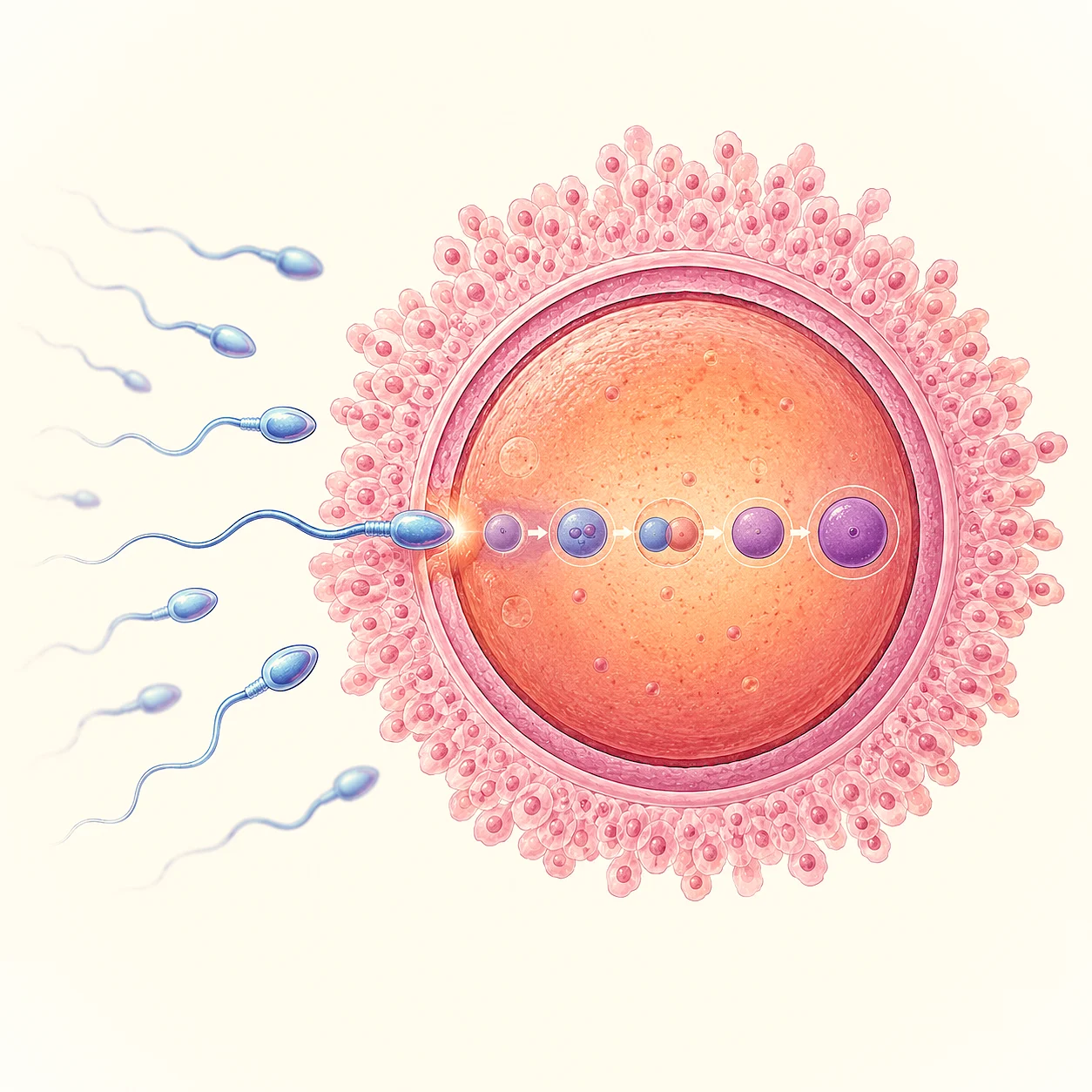
- Egg viability: The released egg (ovum) survives for only 12 to 24 hours after ovulation.
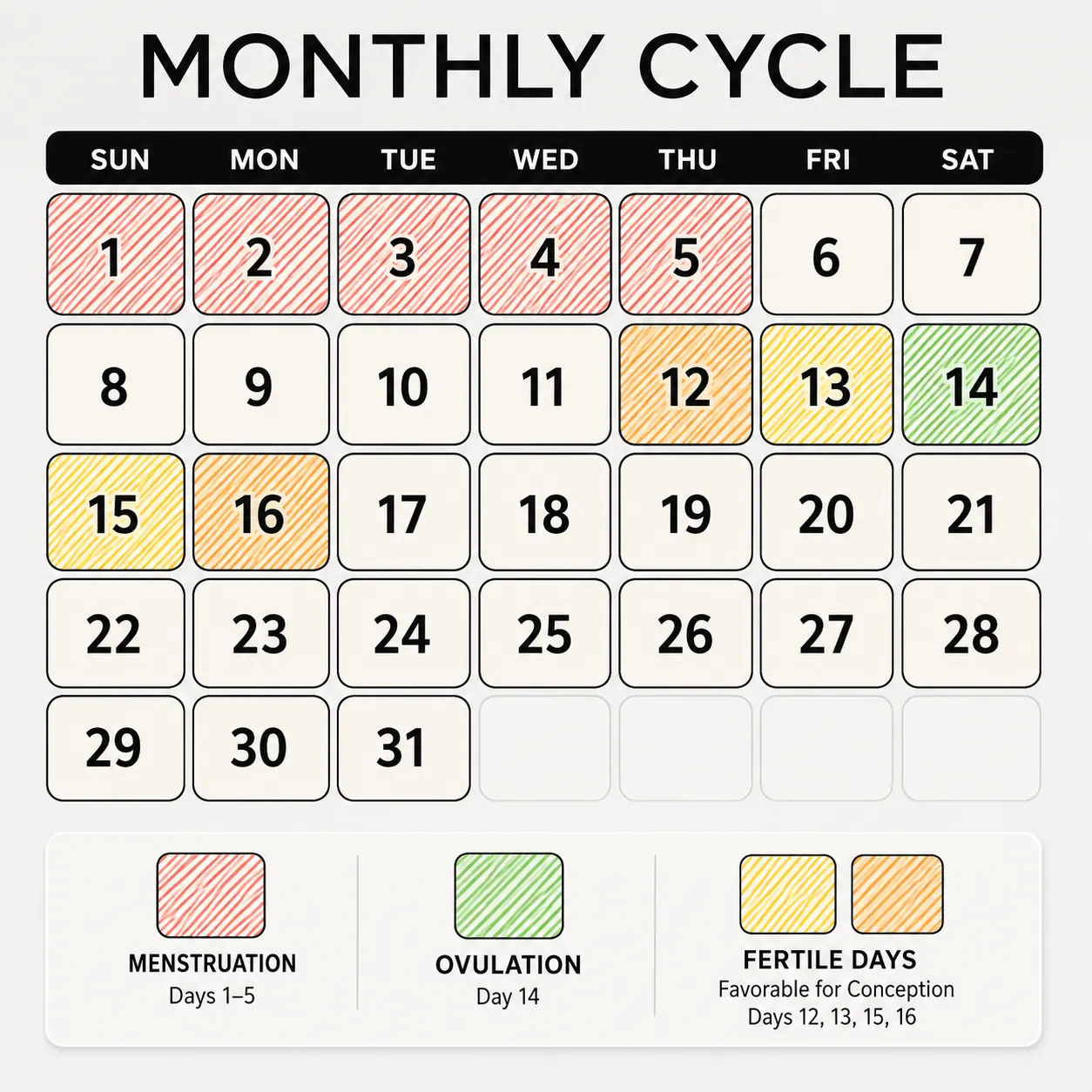
This creates a window of approximately 6 days per cycle when conception is biologically possible – the five days before ovulation and ovulation day itself.
According to research published by the National Institutes of Health (NIH), the probability of conception is highest when intercourse occurs on the two days before ovulation and on ovulation day itself. Missing this window – even by one or two days – can significantly reduce chances in that cycle.
Quick Answer: The fertile window is a 6-day span ending on ovulation day. The two days immediately before ovulation offer the highest per-cycle conception probability.
How to Calculate Your Fertile Window
Step 1: Determine Your Average Cycle Length
The first step is knowing your cycle. Cycle length varies between individuals:
- Short cycles: 21-24 days
- Average cycles: 25-30 days
- Longer cycles: 31-35 days
Ovulation typically occurs 14 days before the next expected period – not necessarily on cycle day 14. For a 28-day cycle, ovulation is approximately on day 14. For a 35-day cycle, ovulation may occur around day 21.
Step 2: Track for Multiple Cycles
One cycle of data is not enough. Track at least 2-3 cycles to identify your typical ovulation pattern before relying on calendar predictions alone.
Step 3: Use the Fertile Window Formula
| Cycle Length | Estimated Ovulation Day | Fertile Window Days |
|---|---|---|
| 21 days | Day 7 | Days 2-7 |
| 24 days | Day 10 | Days 5-10 |
| 28 days | Day 14 | Days 9-14 |
| 30 days | Day 16 | Days 11-16 |
| 35 days | Day 21 | Days 16-21 |
Note: These are estimates. Combine calendar tracking with physical ovulation signs for accuracy.
The 3 Most Reliable Ovulation Signs to Track
Knowing when ovulation actually occurs – rather than estimating it – dramatically improves conception timing. Here are the three most validated clinical biomarkers.
1. Cervical Mucus Changes (Egg White Cervical Mucus)
Cervical mucus changes texture and appearance throughout the cycle, providing a clear biological signal:
- Post-period: Dry or minimal discharge
- Pre-ovulation: Sticky, white, or creamy
- Approaching ovulation: Clear, slippery, stretchy – resembling raw egg whites
- After ovulation: Mucus becomes thick and cloudy again
The egg-white cervical mucus (EWCM) phase signals peak fertility. Intercourse during this phase aligns with the highest-probability days.
2. Basal Body Temperature (BBT) Shift
BBT is your resting body temperature, measured first thing in the morning before any activity.
- Before ovulation: BBT ranges between 97.0-97.5°F (36.1-36.4°C)
- After ovulation: BBT rises by 0.2-0.5°F (0.1-0.3°C) due to progesterone
Important: The BBT rise is a confirmatory sign – it happens after ovulation has already occurred. Use it to:
- Confirm that ovulation happened
- Track your pattern over multiple cycles
- Predict future ovulation timing retroactively
3. LH Surge (Ovulation Predictor Kits – OPKs)
Ovulation predictor kits (OPKs) detect the luteinizing hormone (LH) surge in urine. This surge occurs 24-36 hours before ovulation.
How to use OPKs effectively:
- Begin testing 3-4 days before your estimated ovulation day
- Test at the same time each day – mid-morning to early afternoon is optimal
- A positive result (test line as dark as or darker than control line) signals imminent ovulation
- Plan intercourse on the day of the positive OPK and the following day
The Best Days to Have Intercourse to Conceive: A Day-by-Day Breakdown
Research from the landmark Wilcox study (published in The New England Journal of Medicine) provides a precise probability map:
| Day Relative to Ovulation | Estimated Conception Probability |
|---|---|
| 5 days before | ~10% |
| 4 days before | ~16% |
| 3 days before | ~14% |
| 2 days before | ~27% |
| 1 day before | ~31% |
| Ovulation day | ~33% |
| 1 day after | ~0–5% |
| 2+ days after | ~0% |
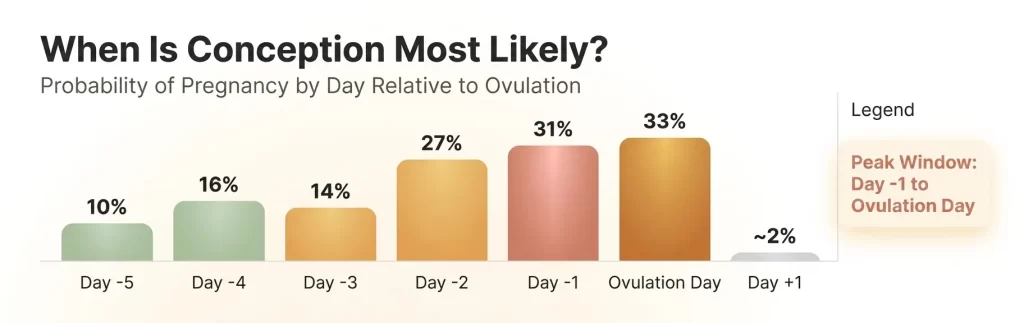
Key takeaway: Intercourse on ovulation day and the two days before offers the highest per-cycle probability. Couples who have intercourse every other day during the fertile window – rather than waiting for the exact day – consistently achieve better outcomes because they account for natural cycle variation.
How Often Should You Have Intercourse When Trying to Conceive?
This is one of the most common questions couples ask, and the science is clear.
Every Other Day vs. Every Day
- Every other day during the fertile window maintains healthy sperm counts while ensuring consistent sperm availability.
- Daily intercourse is equally effective and not harmful for most couples – it does not deplete sperm quality in men with normal semen parameters.
- Waiting 3-5 days between sessions reduces sperm availability during the critical window and is generally counterproductive.
The “Save Up Sperm” Myth
Many couples mistakenly believe that abstaining for several days before ovulation “saves up” stronger sperm. In reality, prolonged abstinence leads to:
- Higher DNA fragmentation in sperm
- Increased proportion of aged, less motile sperm
- No improvement – and often a decrease – in fertilization rates
The American Society for Reproductive Medicine (ASRM) recommends avoiding abstinence periods longer than 5 days when actively trying to conceive.
Practical Intercourse Timing Strategy: A Step-by-Step Plan
Here is a practical protocol combining all three ovulation tracking methods for the best time to have intercourse to conceive.
Step 1 – Cycle Day 1: Mark the first day of your period as Day 1. Begin a new cycle tracking entry.
Step 2 – Cycle Days 8-10 (for average cycles): Start checking cervical mucus daily and begin OPK testing.
Step 3 – First appearance of stretchy, clear mucus: Begin having intercourse every other day. This ensures sperm are already present before the LH surge.
Step 4 – Positive OPK result: Have intercourse on the day of the positive OPK and the next day. This covers the 24-36 hour pre-ovulation window and ovulation day itself.
Step 5 – Post-ovulation: A BBT rise of 0.2-0.5°F confirms ovulation occurred. Note the cycle day for future cycle predictions.
Step 6 – Two-week wait: Avoid the temptation to test too early. The most accurate home pregnancy test results appear 14 days after ovulation.
Fertility-Boosting Habits That Support Optimal Timing
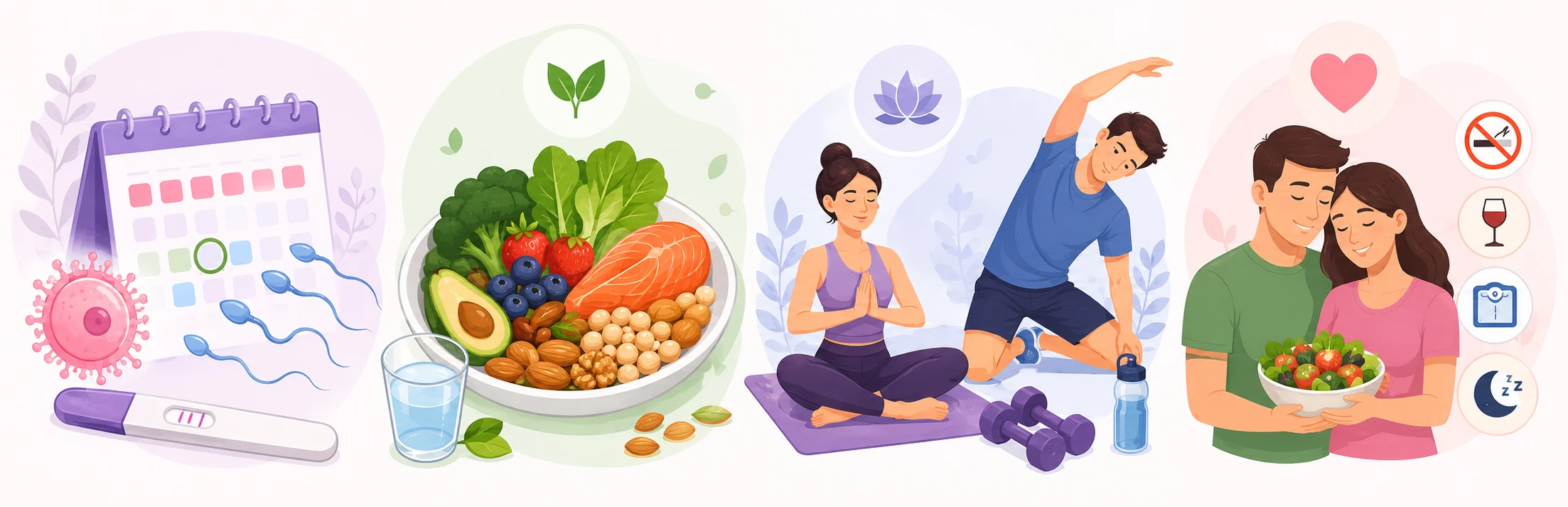
Timing intercourse correctly is essential, but the conditions for conception matter just as much. Several lifestyle factors directly influence both the quality of the reproductive environment and the viability of egg and sperm.
Nutrition and Fertility
A diet rich in folate, zinc, omega-3 fatty acids, and antioxidants supports both egg quality and sperm health. Research consistently shows that a Mediterranean-style fertility diet improves hormonal balance and reduces oxidative stress – two factors that influence the fertile window environment.
Key nutrients to prioritize:
- Folate (not just folic acid): Supports early neural tube development and egg quality
- Zinc: Critical for sperm motility and testosterone production
- CoQ10: Supports mitochondrial function in both eggs and sperm
- Vitamin D: Linked to improved implantation rates
Body Weight and Hormonal Balance
Both underweight and overweight status disrupt the hypothalamic-pituitary-ovarian (HPO) axis, leading to irregular cycles, unpredictable ovulation, and reduced fertility. Even a 5-10% change in body weight can restore regular ovulation in women with weight-related cycle irregularities.
Stress and Cortisol
Chronic stress elevates cortisol levels, which can suppress GnRH (gonadotropin-releasing hormone) pulses and delay or suppress ovulation. Couples actively trying to conceive benefit from stress management techniques – not because stress “prevents pregnancy” in every case, but because it can shift ovulation timing unpredictably, making fertile window targeting less reliable.
Signs You May Be Missing Your Fertile Window
Even couples who track their cycles diligently sometimes miss conception because of subtle errors. Watch for these signs:
- Irregular cycles with no predictable ovulation day: Could indicate anovulatory cycles or PCOS
- No EWCM phase: May indicate low estrogen or suboptimal cervical mucus
- OPK tests always negative: May indicate testing at wrong time, wrong product sensitivity, or a surge that peaks very briefly
- BBT chart shows no clear thermal shift: May indicate anovulation; consult a healthcare provider
If you have tracked consistently for 3-4 cycles with no clear ovulation signs, or if you have been actively timing intercourse for 6-12 months without success, a consultation with a reproductive endocrinologist is warranted.
Common Mistakes Couples Make When Timing Intercourse
Avoiding these errors can meaningfully improve your results each cycle:
- Relying solely on cycle day 14: Assumes a textbook 28-day cycle; inaccurate for most people
- Only having intercourse when the app says to: Fertility apps use averages; your body may differ from the algorithm
- Testing OPKs only once daily: LH surges can be brief; some women peak in the morning, others in the afternoon
- Ignoring cervical mucus: The most real-time fertility signal available; more accurate than calendar predictions
- Stopping intercourse after a positive OPK: Ovulation occurs 24-36 hours after the surge; one more round of intercourse the next day is recommended
- Using lubricants not designed for conception: Standard lubricants can impair sperm motility; use fertility-friendly lubricants like Pre-Seed if needed
- Testing pregnancy too early: Testing before 14 DPO (days past ovulation) increases the likelihood of false negatives
What Happens After Conception: The First 24 Hours
Understanding the immediate post-conception process helps couples stay grounded during the two-week wait.
After ovulation, the egg travels from the fallopian tube toward the uterus. If sperm are present, fertilization occurs in the ampullary region of the fallopian tube, usually within hours of ovulation.
For a detailed breakdown of exactly what happens at the cellular level, the step-by-step guide to ovulation and conception on Gntro explains the fertilization-to-implantation process with clinical accuracy.
Key post-ovulation milestones:
- Day 1-3: Fertilized egg (zygote) travels toward uterus
- Day 4-5: Embryo reaches blastocyst stage
- Day 6-10: Implantation into uterine lining occurs
- Day 10-14: HCG begins to rise, detectable by pregnancy test
Age, Cycle Regularity, and Conception Timing: What Changes
Fertility is not static across a woman’s reproductive years. Age-related changes affect how urgently and precisely intercourse timing needs to be managed.
Comparison: Fertility Timing Across Age Groups
| Age Range | Avg. Cycles to Conceive | Fertile Window Reliability | Recommended Action |
|---|---|---|---|
| Under 25 | 2-4 cycles | High | Standard tracking |
| 25-30 | 3-6 cycles | High | Standard tracking |
| 30-35 | 4-8 cycles | Moderate | OPK + BBT tracking |
| 35-38 | 6-12 cycles | Moderate-lower | Precise timing + monitoring |
| 38-40 | 10-18+ cycles | Lower | Specialist consultation |
| 40+ | Highly variable | Decreased | Early specialist involvement |
Women over 35 have a narrower margin for error per cycle. The number of viable eggs decreases, and egg quality declines, making accurate fertile window targeting more critical – not less.
Male Factor: How Sperm Timing and Health Affect Conception
Conception timing is not solely a female responsibility. Male reproductive factors play an equally important role.
Sperm Optimization for the Fertile Window
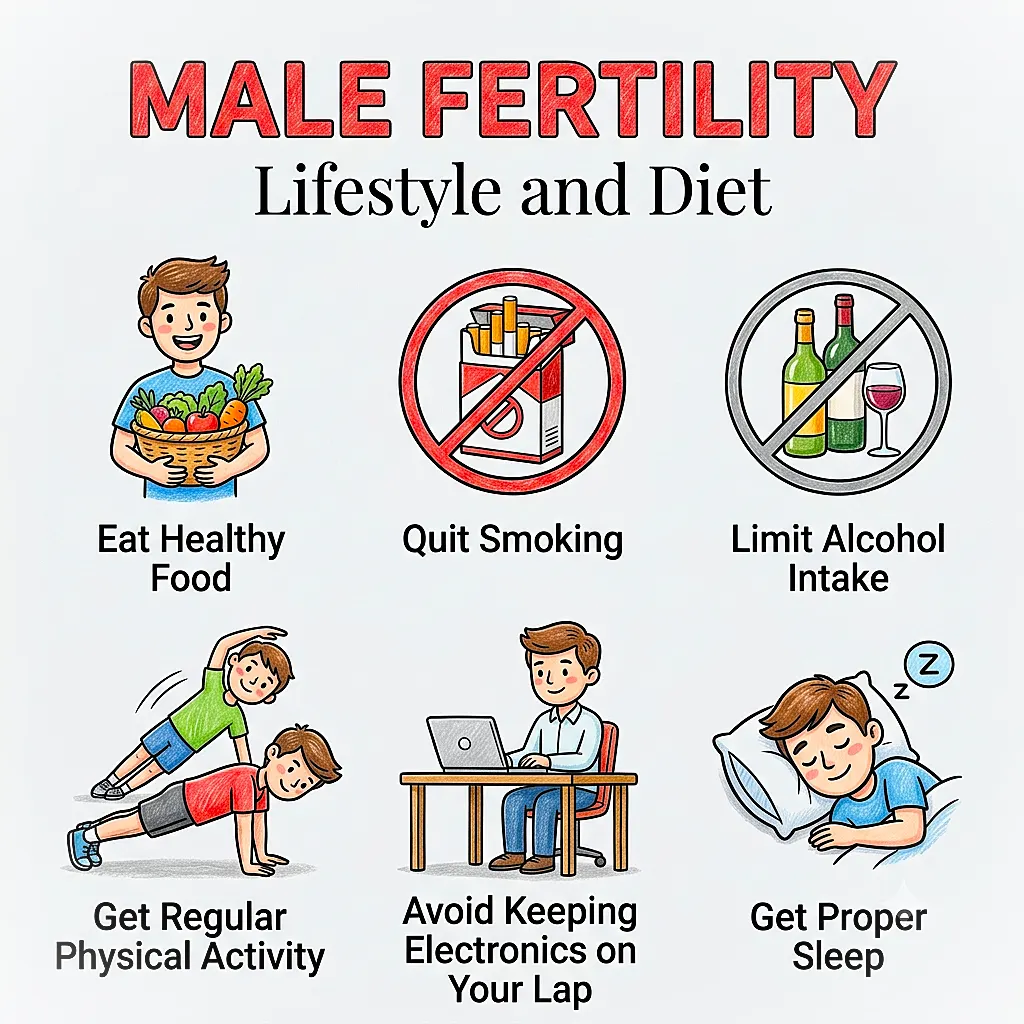
- Sperm production cycle (spermatogenesis): Takes approximately 72-74 days; lifestyle changes take roughly 3 months to reflect in semen quality
- Optimal abstinence period before the fertile window: 2-3 days – enough to replenish count without accumulating aged sperm
- Testicular temperature: Elevated scrotal temperature from hot baths, saunas, or laptop use can reduce sperm quality; avoid these 2-3 months before active trying
What Semen Analysis Reveals
If timing has been consistently accurate but pregnancy has not occurred after 6-12 months (or 6 months for women over 35), a semen analysis is the logical next step. Key parameters include:
- Count: Greater than 15 million/mL is considered normal
- Motility: More than 40% of sperm should be motile
- Morphology: At least 4% normal forms (Kruger strict criteria)
Expert Tips for Maximizing Each Cycle
These evidence-based recommendations go beyond basic timing to optimize every aspect of the conception attempt:
- Track 3 signs simultaneously: Combine calendar prediction, OPK, and cervical mucus for the most accurate fertile window identification
- Take prenatal vitamins at least 3 months before trying: Folate stores must be built up before conception, not after
- Maintain sleep consistency: Disrupted circadian rhythms can shift ovulation timing by 1-3 days
- Avoid anti-inflammatory medications (NSAIDs) around ovulation: Some research suggests NSAIDs may interfere with follicle rupture
- Reduce alcohol and caffeine intake: Both are associated with reduced fecundability (per-cycle conception probability)
- Address thyroid health: Subclinical hypothyroidism is a common and underdiagnosed cause of irregular ovulation; ask your doctor for a TSH test
Research published in Human Reproduction (Oxford Academic) consistently links modifiable lifestyle factors to improved outcomes, even when fertility is otherwise normal.
Frequently Asked Questions (FAQ)
What is the best time to have intercourse to conceive?
The best time to have intercourse to conceive is during the fertile window: the five days before ovulation and ovulation day itself. The two days immediately preceding ovulation and ovulation day offer the highest per-cycle conception probability, according to multiple peer-reviewed studies.
How do I know when I am ovulating?
You can identify ovulation through three main methods: tracking cervical mucus (look for clear, stretchy, egg-white consistency), using an ovulation predictor kit (OPK) to detect the LH surge, and charting your basal body temperature (BBT). Using all three together provides the most reliable picture.
Can I get pregnant after ovulation has already happened?
Conception after ovulation is technically possible but extremely limited. The egg is only viable for 12-24 hours post-ovulation. Intercourse needs to occur before or during ovulation for fertilization to happen. By the time ovulation is fully confirmed (via BBT rise), the window has typically closed.
Is every other day or every day better when trying to conceive?
Both every day and every other day intercourse during the fertile window are effective strategies. Every other day maintains sperm concentration while ensuring consistent presence in the reproductive tract. Daily intercourse is equally acceptable for men with normal sperm parameters.
Does stress affect the best time to have intercourse to conceive?
Stress does not directly prevent conception in every case, but chronic stress can delay or shift ovulation by altering hormonal signaling – specifically GnRH pulses. This makes fertile window prediction less reliable, which is why stress management is a practical part of any conception strategy.
How long should we try before seeing a doctor?
The general guideline is:
- Under 35: Try for 12 months before seeking evaluation
- 35-40: Try for 6 months before seeking evaluation
- Over 40: Consult a specialist sooner, after 3-6 months of trying
If there are known conditions (irregular periods, PCOS, endometriosis, prior surgeries), consult earlier regardless of age.
Does the best time to have intercourse to conceive change with age?
The fertile window itself remains the same biologically – the 6-day periovulatory period. However, as women age (particularly after 35), egg quality and ovarian reserve decline, making each fertile window less likely to result in successful fertilization and implantation. Precise timing becomes more – not less – important with age.
Time Your Fertility Window with Confidence
Understanding the best time to have intercourse to conceive is not complicated – but it does require moving beyond guesswork and into the precision that reproductive science makes available to everyone.
Your six-day fertile window is predictable, trackable, and actionable. By combining cervical mucus monitoring, LH surge detection, and BBT charting, you can identify your two highest-probability days each cycle with confidence. Add sperm-friendly habits, a fertility-supportive diet, and consistent cycle tracking, and you have a complete, evidence-based conception strategy.
The couples who conceive fastest are not necessarily the most fertile – they are the ones who understand their biology and act on it at the right time. Whether you are just starting out or have been trying for a while, precision timing gives every cycle its best possible chance.
Ready to take a more strategic, science-driven approach to how to conceive naturally? Explore Gntro’s complete fertility tools and resources designed to guide you from cycle tracking to conception with clarity and confidence.