
Unexplained infertility in India is diagnosed when a couple has been trying to conceive for at least 12 months without success, yet standard fertility tests, including ovulation tracking, semen analysis, and tubal patency studies, all return normal results. It accounts for roughly 10 to 15 percent of infertility cases seen at Indian fertility clinics. The diagnosis does not mean nothing is wrong; it means current diagnostic technology has not yet identified the exact barrier to conception.
Getting a fertility report that says “everything is normal” should feel like good news. Instead, for thousands of Indian couples every year, it becomes one of the most confusing and emotionally draining moments of their fertility journey. You want to know what is unexplained infertility India doctors are actually referring to when they hand you this label, and more importantly, what you’re supposed to do next. If you’re trying to understand your own reproductive health in more depth, our guide on how to conceive naturally breaks down the physiological checkpoints that have to align each cycle for pregnancy to occur.
This article walks through what the diagnosis really means, why it’s more common than most people realise, the hidden factors doctors are increasingly investigating, and the practical steps that have helped Indian couples move forward with clarity instead of guesswork.
What Does Unexplained Infertility Mean?
Unexplained infertility is a clinical diagnosis given when:
- A couple has had regular, unprotected intercourse for 12 months (or 6 months if the woman is over 35) without conceiving
- Ovulation is confirmed to be occurring normally
- The fallopian tubes are open and undamaged
- Semen analysis parameters (count, motility, morphology) fall within normal ranges
- Basic hormonal levels (FSH, LH, AMH, thyroid, prolactin) are within acceptable limits
- No structural abnormalities such as fibroids, polyps, or endometriosis are visible on imaging
In short, every box on the standard fertility checklist is ticked, yet pregnancy still isn’t happening. It’s a diagnosis of exclusion, meaning doctors arrive at it only after ruling out every commonly identifiable cause.
Is Unexplained Infertility the Same as “No Cause At All”?
Not quite. It’s more accurate to think of it as “no cause detectable with current standard testing,” rather than proof that biology is functioning perfectly. Many specialists now believe that subtle issues in egg quality, sperm DNA integrity, embryo-uterine communication, or immune interactions are often the real culprits behind these cases, but these factors aren’t part of routine testing panels in most Indian clinics, either because the tests are newer, more expensive, or reserved for couples who’ve already gone through one or two failed treatment cycles. In practice, this means the “unexplained” label often says more about the limits of first-line diagnostics than it does about the couple’s actual reproductive health.
Why This Diagnosis Feels Different From Others
Most infertility diagnoses come with a concrete next step attached: a blocked tube points toward surgery or IVF, a low sperm count points toward specific treatments, and PCOS points toward ovulation induction protocols. Unexplained infertility doesn’t offer that same clarity, which is exactly why so many couples describe it as more confusing, and often more frustrating, than receiving a diagnosis with a defined cause. Understanding this upfront helps set realistic expectations: the treatment plan will necessarily be broader and more exploratory than it would be for a clearly identified problem.
How Common is Unexplained Infertility in India?

Infertility affects an estimated 1 in 6 couples of reproductive age globally, and India’s fertility clinics report broadly similar patterns. Among all infertility diagnoses made in Indian fertility centres, unexplained infertility typically accounts for 10 to 15 percent of cases, making it one of the more frequent categories alongside PCOS-related and male-factor infertility.
Several factors specific to the Indian context tend to compound the picture:
- Rising average age at marriage and first pregnancy attempt in urban India
- High rates of undiagnosed subclinical thyroid dysfunction
- Widespread vitamin D deficiency, even in sunny regions, due to indoor lifestyles
- Elevated stress and shift-work patterns in metro cities
- Delayed medical consultation, often only after 2 to 3 years of trying
This means many “unexplained” cases in India may partly reflect gaps in early testing timelines rather than truly mysterious biology.
The Standard Fertility Workup: What “Normal” Actually Means
Before a couple is labelled with unexplained infertility, doctors typically run through a defined set of investigations. Here’s what a standard Indian fertility workup includes and what a “normal” result means for each:
| Test | What It Checks | What “Normal” Means |
|---|---|---|
| Hormonal panel (FSH, LH, AMH, TSH, Prolactin) | Ovarian reserve and hormonal balance | Levels fall within lab reference ranges for age |
| Transvaginal ultrasound | Uterine structure, ovarian follicles, cysts | No fibroids, polyps, or major structural issues |
| Hysterosalpingography (HSG) | Tubal patency | Both fallopian tubes are open, no blockage |
| Semen analysis | Sperm count, motility, morphology | Meets WHO reference values |
| Ovulation tracking (BBT, LH kits, mid-luteal progesterone) | Confirms ovulation is occurring | Progesterone rise confirms an ovulatory cycle |
| Diagnostic laparoscopy (in select cases) | Endometriosis, pelvic adhesions | No visible lesions or scarring |
When every single one of these returns a normal result and pregnancy still hasn’t occurred, the unexplained infertility diagnosis is applied. If you’re unsure whether your own cycle is even ovulatory to begin with, this guide on what exactly happens during ovulation and conception is a useful starting point before assuming the “unexplained” label applies to you.
Possible Hidden Causes Behind Unexplained Infertility
Even when standard tests look clean, several subtler factors are increasingly recognised by reproductive specialists as contributors. None of these are part of India’s routine testing panels yet, which is part of why the label exists in the first place.
1. Egg Quality Beyond Ovarian Reserve
AMH levels tell you how many eggs remain in the ovarian reserve, not how genetically healthy those eggs actually are. A woman can have a perfectly reassuring AMH number and still experience a high rate of chromosomally abnormal eggs, particularly once she crosses her mid-30s. This distinction between egg quantity and egg quality is one of the most misunderstood parts of a fertility workup. Standard blood tests were never designed to measure chromosomal competence, so a “good” AMH result can quietly mask an underlying quality problem that only becomes visible during an actual IVF cycle, when embryologists can observe fertilisation and early embryo development directly. This is part of why some couples with normal-looking reports still don’t conceive naturally month after month, even with textbook ovulation and open tubes.
2. Sperm DNA Fragmentation
A man can have a completely normal semen analysis, meaning normal count, motility, and morphology, while still carrying high levels of DNA fragmentation in his sperm. Fragmentation refers to breaks or damage in the genetic material carried inside the sperm head. Because a standard semen analysis only evaluates shape, movement, and concentration under a microscope, it has no way of detecting this kind of internal genetic damage. High fragmentation can still allow fertilisation to occur, but it often interferes with healthy embryo development afterward, which shows up clinically as difficulty conceiving despite “normal” reports on both partners. Oxidative stress, smoking, prolonged heat exposure from laptops or tight clothing, and certain infections are commonly linked to elevated fragmentation levels. Men looking to improve baseline sperm health can start with our detailed breakdown on how Indian men can increase sperm count naturally, much of which also supports better sperm DNA integrity.
3. Subtle Endometrial Receptivity Issues

The uterine lining needs to be “receptive,” meaning biologically ready to accept an embryo, during a narrow window that typically falls a few days after ovulation. Even when the uterus looks structurally normal on ultrasound, with a healthy lining thickness and no polyps or fibroids, there can still be a mismatch between when the embryo is ready to implant and when the lining is actually receptive. This receptivity window can shift earlier or later than expected in some women, something that only specialised testing, such as an Endometrial Receptivity Assay, is designed to detect. This test isn’t part of a routine first-round workup in most Indian clinics, which means a genuine but subtle timing mismatch can easily be missed and labelled as “unexplained.”
4. Undiagnosed Mild Endometriosis

Laparoscopy, the gold-standard method for confirming endometriosis, is not always performed as a first-line test in India because it’s a surgical procedure with its own risks and recovery time. As a result, mild or early-stage endometriosis, where the lesions are small and don’t distort pelvic anatomy, can go completely undetected on a standard transvaginal ultrasound. Yet even mild endometriosis is known to create a subtly inflammatory pelvic environment that can affect egg quality, fertilisation, and implantation, without ever showing up as a visible cyst or structural abnormality. Because ultrasound findings come back clean, many of these cases are quietly filed under “unexplained” rather than correctly identified as endometriosis-related infertility. Our detailed guide on how endometriosis is diagnosed late in Indian women explains why this particular blind spot is so common across Indian fertility care.
5. Subclinical Thyroid and Metabolic Factors

TSH within a “normal” range on a standard lab report doesn’t always mean it’s optimal for conception. Most general lab reference ranges for TSH are quite wide, often extending up to 4.5 or even 5.5 mIU/L, while many reproductive endocrinologists now prefer tighter fertility-specific targets, generally under 2.5 mIU/L, for women actively trying to conceive. A woman can therefore receive a report that says her thyroid is “normal” by general medical standards while still sitting in a range that’s suboptimal for conception and early pregnancy support. Insulin resistance, even without a formal PCOS diagnosis, is another metabolic factor that frequently goes unchecked in a standard fertility panel and can subtly interfere with ovulatory quality. Read more in our guide on how hypothyroidism affects female fertility and ovulation.
6. Immune and Inflammatory Factors

In a smaller subset of cases, the immune system may play a role in interfering with implantation, either by treating the early embryo as foreign tissue or through elevated inflammatory markers in the uterine environment. This is an area that’s still being actively researched, and reliable, validated testing for it isn’t standard practice at most Indian fertility centres yet. Where it is offered, it’s usually reserved for couples with repeated unexplained IVF implantation failure rather than as part of an initial workup, which means it rarely factors into an early unexplained infertility diagnosis.
7. Chronic Stress and Lifestyle Load

While stress alone rarely causes infertility outright, chronic elevated cortisol can disrupt the finely timed hormonal signalling that governs ovulation, in ways too subtle for a single blood test, taken on one particular day, to flag. Long, irregular work hours, disrupted sleep cycles, and the emotional weight of the fertility journey itself can all compound this effect. This doesn’t mean stress is “the cause” in a simple sense, but it’s frequently an amplifying factor sitting quietly underneath an otherwise unexplained diagnosis, and it’s one of the few contributors couples can meaningfully influence while other investigations continue.
Common Mistakes Couples Make After an Unexplained Infertility Diagnosis

- Assuming nothing can be done: An unexplained label is sometimes mistaken for a dead end, when in reality it simply means treatment has to proceed without a single confirmed target, not that treatment pathways don’t exist.
- Jumping straight to IVF without trying lower-intervention options first: Many couples under 35 conceive with IUI or ovulation induction before ever needing IVF, and skipping straight to the most expensive, most invasive option isn’t always necessary or advisable.
- Not repeating outdated test results: A semen analysis, AMH level, or thyroid panel from two years ago may no longer reflect current status, especially if weight, stress levels, or health conditions have changed in the meantime.
- Overlooking the male partner’s evaluation: Roughly 40 percent of infertility cases involve a male factor, and a single “normal” semen analysis alone doesn’t capture DNA fragmentation, so treating male fertility as a closed chapter after one report can be a costly assumption.
- Ignoring nutritional gaps: Deficiencies in folic acid, vitamin D, and iron are common in Indian diets and are correctable within a few months. See our guide on Indian food sources of folic acid for women trying to conceive.
- Timing intercourse incorrectly: Even with normal ovulation, missing the fertile window reduces monthly chances more than most couples realise. Our guide on the best time to have intercourse to conceive covers this in detail.
- Delaying a second medical opinion: Reproductive endocrinologists who specialise specifically in fertility sometimes catch what a general gynaecologist, working across many other areas of women’s health, might miss on a first pass.
- Treating every cycle as a fresh start with no data carried forward: Without tracking cycle length, ovulation timing, and treatment response over several months, it becomes harder for both the couple and the doctor to spot patterns that would otherwise guide the next decision.
Step-by-Step: What To Do After an Unexplained Infertility Diagnosis

- Confirm the timeline is accurate. Make sure 12 months (or 6, if over 35) of properly timed attempts have genuinely passed.
- Request a second-tier evaluation. Ask specifically about sperm DNA fragmentation testing and a diagnostic hysteroscopy or laparoscopy if not already done.
- Reassess thyroid and vitamin D levels with stricter fertility-specific ranges, not just standard lab reference ranges.
- Optimise nutrition and body weight for both partners over a 3-month window, since this is roughly one full egg and sperm maturation cycle.
- Discuss ovulation induction with timed intercourse or IUI as a first-line treatment option before considering IVF.
- Set a re-evaluation checkpoint, typically 3 to 6 cycles of a given treatment approach, before escalating to the next intervention.
- Involve a fertility counsellor or support group to manage the emotional load throughout the process.
Treatment Options for Unexplained Infertility: A Comparison
| Treatment | Best Suited For | Approx. Success Rate Per Cycle | Typical Cost Range in India |
|---|---|---|---|
| Ovulation induction + timed intercourse | Couples under 35, trying for under 2 years | 10–15% | Lower cost, medication-based |
| Intrauterine Insemination (IUI) | Couples under 35, no severe male factor | 10–20% | Moderate cost |
| In Vitro Fertilisation (IVF) | Couples over 35 or after 3–4 failed IUI cycles | 30–40% | Higher cost |
| IVF with additional diagnostics (ERA, sperm DNA fragmentation testing) | Couples with repeated unexplained IVF failure | Varies by underlying finding | Highest cost |
Success rates vary significantly by clinic, age, and underlying subtle factors, so these figures should be discussed with your own fertility specialist rather than treated as guarantees.
How Indian Fertility Specialists Typically Sequence Treatment
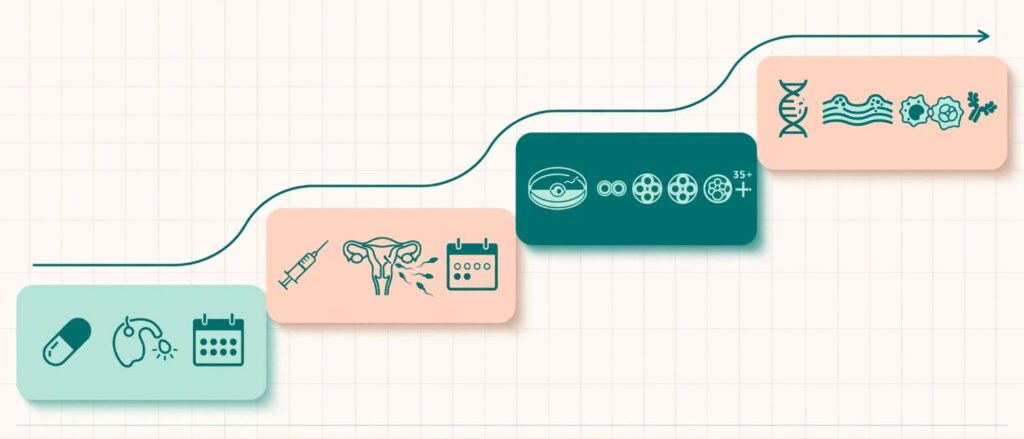
Most Indian reproductive endocrinologists follow a stepwise approach rather than jumping straight to the most invasive option, largely because unexplained infertility, by definition, doesn’t point to one obvious fix.
- First 3 to 6 cycles: Ovulation induction with medication such as letrozole or clomiphene, combined with precisely timed intercourse. This is the least invasive route and is often tried first for couples under 35 who haven’t been trying for very long.
- Next 3 to 4 cycles, if the first step doesn’t work: Intrauterine insemination, usually paired with mild ovarian stimulation, which places washed sperm directly into the uterus around the time of ovulation to shorten the distance sperm need to travel.
- After repeated IUI failure, or for women over 35: IVF is typically recommended sooner, since IVF also serves a diagnostic purpose here, showing the embryologist exactly how fertilisation and embryo development are progressing, which plain blood tests and scans cannot reveal.
- After repeated unexplained IVF failure: Additional diagnostics such as sperm DNA fragmentation testing, an endometrial receptivity assay, or immune panel testing may be introduced to look for the subtler hidden causes covered earlier in this guide.
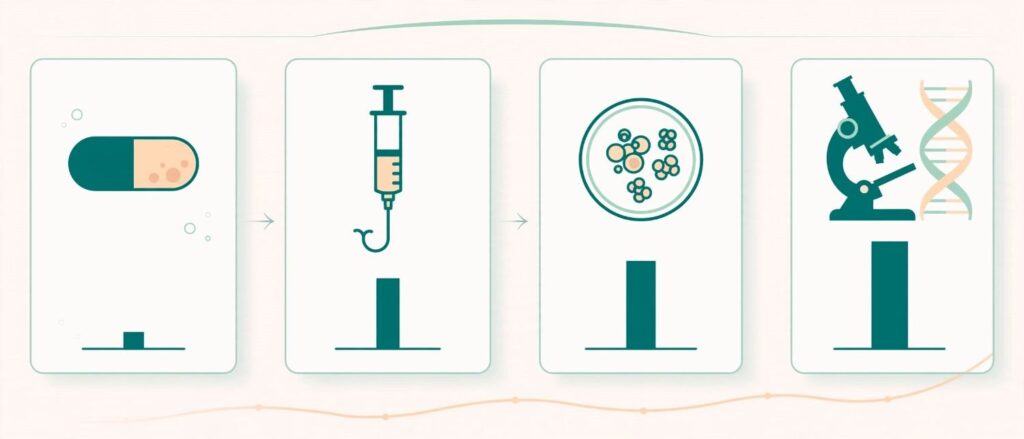
This staged approach matters because it balances cost, invasiveness, and emotional load against the odds of success at each stage, rather than defaulting to the most aggressive option immediately. Couples should feel comfortable asking their specialist exactly why a particular step is being recommended next, and what specific finding would justify moving to the following stage.
Age, Duration of Infertility, and When To Shorten Your Timeline
Not every couple with unexplained infertility should follow the same 12-month rulebook. Age and how long you’ve already been trying both change how quickly you should escalate care, and this is one of the areas where Indian couples most often lose valuable time.
Why Age Changes the Math
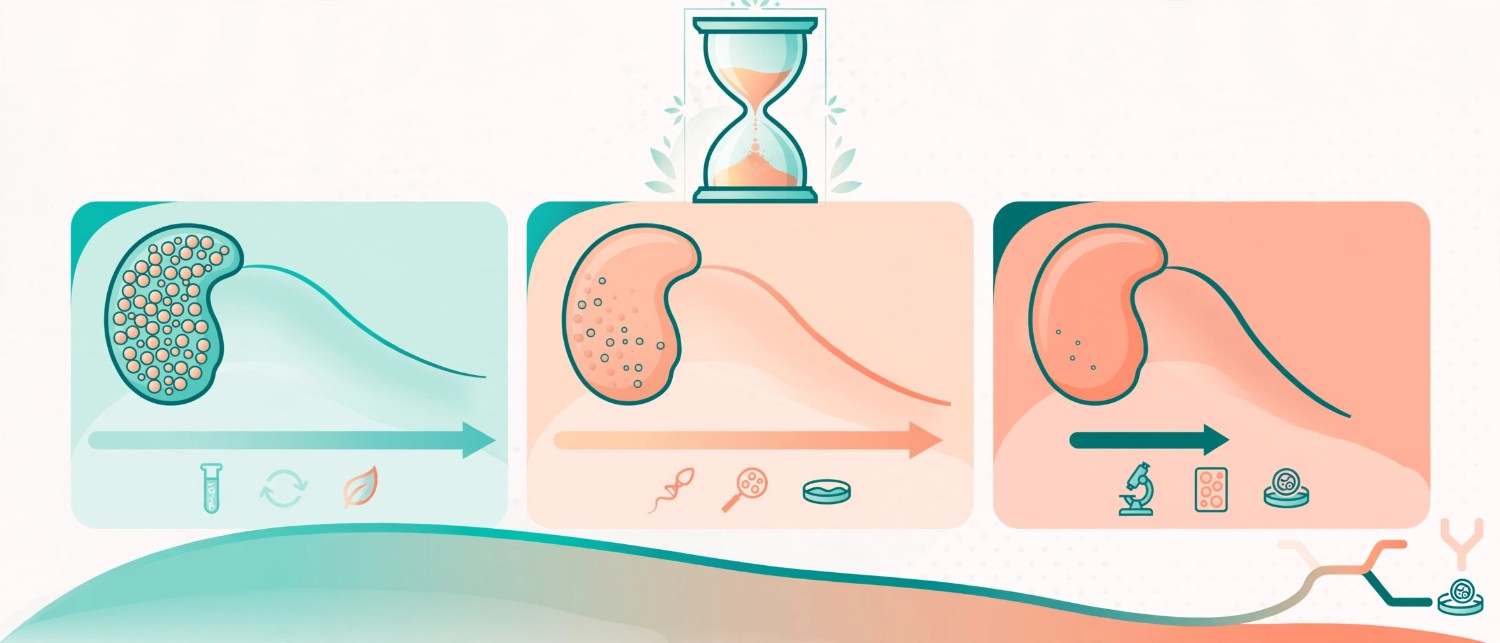
Egg quantity and quality both decline with age, but the decline isn’t linear. It’s relatively gradual through the early 30s and then accelerates more noticeably after 35, and again after 38. This is precisely why medical guidelines shorten the “trying” window from 12 months to 6 months for women 35 and older before recommending a fertility workup. For a woman already in her late 30s with an unexplained diagnosis, waiting through multiple rounds of ovulation induction before considering IVF may cost more in egg quality decline than it saves in cost or invasiveness. Every additional year matters more than it did a decade earlier, which is why specialists often recommend compressing the treatment ladder for older patients rather than working through each step at the standard pace.
Why Duration of Infertility Matters Independently of Age
Two couples can both be 30 years old, yet one has been trying for 14 months while the other has been trying for 4 years. Duration itself is a meaningful prognostic factor. The longer unexplained infertility has persisted without a diagnosis or successful treatment, the lower the spontaneous conception rate tends to be going forward, which is part of why doctors ask so specifically about how many months or years a couple has already invested before recommending next steps.
A Practical Way to Think About Timelines
- Under 30, trying less than a year: Reasonable to continue natural attempts a bit longer while optimising nutrition, timing, and lifestyle factors
- 30 to 34, trying 1 to 2 years: A full workup plus consideration of ovulation induction or IUI is generally appropriate
- 35 and above, trying 6 months or more: Move to a full workup promptly, and be open to a shorter runway before IVF is discussed
- Any age, trying 3+ years with prior partial workups: Push for the deeper diagnostics covered earlier, including sperm DNA fragmentation and endometrial receptivity testing, rather than repeating the same basic tests
Expert Tips to Improve Your Chances Naturally

- Track ovulation with more than one method (BBT plus LH strips) to reduce timing errors
- Maintain a stable, moderate exercise routine rather than extreme training, which can suppress ovulation
- Prioritise a nutrient-dense diet with adequate folate, iron, omega-3s, and antioxidants; our complete fertility diet meal plan guide lays this out meal by meal
- Limit alcohol and quit smoking, for both partners, since sperm quality is affected too
- Address sleep deprivation, which disrupts reproductive hormone rhythms
- Don’t wait too long between test rounds; fertility windows are time-sensitive, especially after 35
Emotional Wellbeing While Trying to Conceive
An unexplained diagnosis often feels harder to process than one with a clear medical explanation, simply because there’s no obvious target to fix. When a report shows PCOS or a blocked tube, there’s at least a defined problem to work against. With unexplained infertility, the uncertainty itself becomes part of the emotional burden, and it’s common to feel frustrated, isolated, or even quietly guilty, as though something must be wrong with one partner’s body that simply hasn’t been found yet.
In the Indian context, this emotional load is often compounded by external pressure: extended family asking pointed questions at every gathering, cultural assumptions that place responsibility disproportionately on the woman, and limited public conversation around male-factor contributions. Many couples describe feeling like they’re managing two parallel processes at once, the actual medical journey and the social performance of “trying,” which can be exhausting on its own.

Couples who navigate this phase best tend to share a few common habits:
- Communicating openly with each other about the process, including fears and frustrations, instead of one partner carrying the weight silently while the other feels shut out
- Seeking out fertility-focused counselling rather than generic therapy alone, since a counsellor familiar with reproductive medicine can normalise experiences that feel isolating otherwise
- Connecting with other couples going through similar unexplained diagnoses, whether through clinic-run support groups or online communities, which reduces the sense of being uniquely unlucky
- Setting realistic checkpoints instead of open-ended waiting, so each month doesn’t feel like an indefinite countdown with no clear next decision point
- Deciding in advance how to handle family questions, so that difficult conversations don’t have to be improvised in the moment
This emotional groundwork often matters just as much as the medical plan itself, and specialists increasingly recognise that couples who feel supported tend to stay more consistent with treatment protocols, which in itself can improve outcomes over time.
FAQ Section
Q1. What is unexplained infertility in India, exactly?
It’s a diagnosis given when a couple hasn’t conceived after 12 months of regular, unprotected intercourse, despite normal results on ovulation, tubal, hormonal, and semen tests.
Q2. Can unexplained infertility be treated?
Yes. Treatment options range from ovulation induction and timed intercourse to IUI and IVF, chosen based on age, duration of infertility, and how the couple responds to initial treatment.
Q3. How long should we try before seeing a fertility specialist?
Generally 12 months if the woman is under 35, or 6 months if she is 35 or older. Couples with known risk factors should consult sooner.
Q4. Does stress cause unexplained infertility?
Chronic stress alone rarely causes infertility, but it can disrupt hormonal signalling enough to make conception harder, particularly when combined with other subtle factors.
Q5. Should we go straight to IVF with an unexplained infertility diagnosis?
Not necessarily. Many specialists recommend starting with lower-intervention options like ovulation induction or IUI before moving to IVF, unless age or other factors suggest a faster escalation.
Q6. Are there hidden causes doctors might be missing?
Yes. Sperm DNA fragmentation, mild undiagnosed endometriosis, subclinical thyroid dysfunction, and endometrial receptivity issues are increasingly recognised contributors that fall outside standard testing panels, and are worth discussing with a specialist if initial treatment cycles aren’t working.
Q7. Is unexplained infertility more common in India than in other countries?
The proportion, roughly 10 to 15 percent of infertility cases, is broadly similar to global figures. What differs in India is the tendency to delay the initial fertility workup by a year or more, which means some cases labelled unexplained might have been identified earlier with prompt testing.
Q8. Can lifestyle changes alone resolve unexplained infertility?
For some couples, correcting nutritional deficiencies, improving sleep, reducing stress, and reaching a healthier body weight measurably improves natural conception odds within a few months. For others, lifestyle changes support but don’t replace medical treatment such as ovulation induction, IUI, or IVF, so they’re best viewed as a parallel track rather than a standalone solution.
Conclusion

An unexplained infertility diagnosis in India doesn’t mean your chances of conceiving are gone; it means the standard toolkit hasn’t found the answer yet, and there’s still a clear, structured path forward. From reassessing hidden factors like sperm DNA fragmentation and subclinical thyroid issues, to trying ovulation induction, IUI, or IVF in a stepwise manner, most couples do have workable options ahead of them. If you’re ready to take the next step with a structured, evidence-based approach, today.